


North Iceland Road Trip: Giants, Gods & Magma (2025–2026 Guide)
The ultimate North Iceland road trip begins here. While most travelers rush to the South Coast, the real Iceland—its myths, monsters, volcanic landscapes, and Arctic silence, lives in the North. Steam rises from the earth like dragon breath, whales breach in icy waters, and the Diamond Circle unfolds like a gateway to another world.
If you want folklore instead of crowds, this road trip will take you through the country’s most magical and remote landscapes.
Internal links: Explore our East Iceland campervan guide or browse our Iceland campervan fleet.
Outbound resources: Check safety updates at SafeTravel Iceland and real-time road conditions at road.is.
Why Choose a North Iceland Road Trip?
The South Coast is busy, but North Iceland offers solitude, authenticity, and vast landscapes you can enjoy almost alone.
- The Solitude: Drive for long stretches without seeing another car.
- The Wildlife: The best whale watching and puffin colonies in Iceland.
- The Geology: The most active volcanic region in the country.
- The Freedom: Relaxed towns, friendly locals, and calmer campsites.
1. Begin Your North Iceland Road Trip at the Realm of the Gods
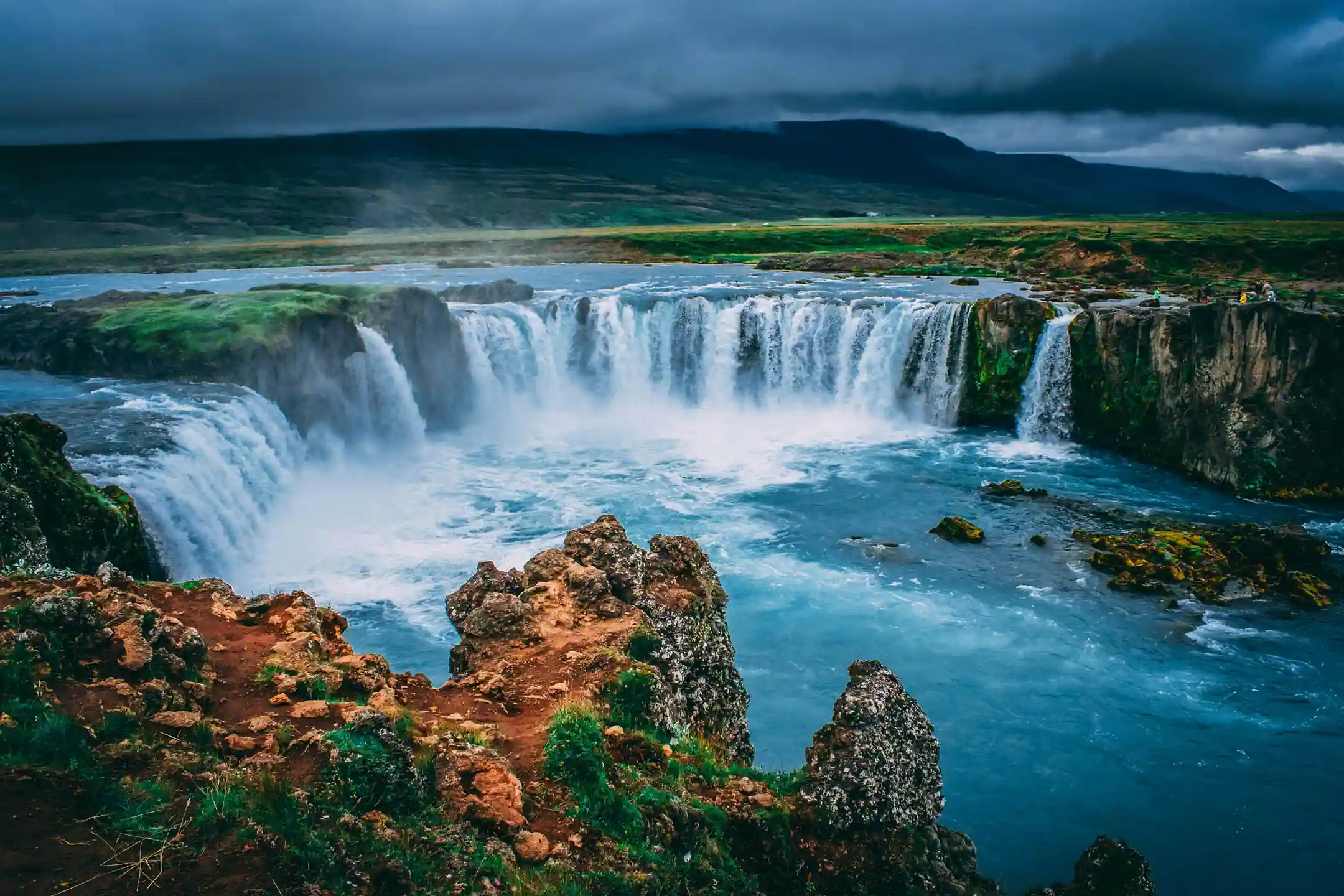
The Stop: Goðafoss (“Waterfall of the Gods”)
Start your adventure with a waterfall steeped in Icelandic history and legend.
The Myth: In 1000 AD, Þorgeir Ljósvetningagoði threw his pagan idols into Goðafoss, symbolizing Iceland’s conversion to Christianity.
The Experience: Goðafoss forms a breathtaking turquoise horseshoe carved into dark basalt cliffs. On a sunny day, mist and light create vivid rainbows over the canyon.
Campervan Tip: Park on the West Bank for the iconic wide-angle view, then walk across the bridge to the East Bank to stand almost at water level.
2. Explore Alien Landscapes
The Stop: Lake Mývatn Geothermal Area
Drive about 45 minutes east of Akureyri and the landscape changes from farmland to volcanic chaos. This is the geothermal heart of your North Iceland road trip.
Dimmuborgir (“Dark Castles”)
Twisted lava formations that look like a ruined fortress city.
- Folklore: Said to be the capital of the Hidden People (elves).
- Hike: The Church Circle (Kirkjuhringur) route takes around one hour and suits most fitness levels.
Námaskarð Pass
- The Senses: Hissing steam vents, bubbling mud pots, and a strong sulfur smell—the raw power of the earth.
- The Colors: Reds, oranges, and yellows from mineral deposits make the ground look almost Martian.
Mývatn Nature Baths
- Why it’s better than the Blue Lagoon: Usually quieter, often cheaper, and the view stretches over craters and lava fields.
- Best time: Visit around 22:00 in summer for the Midnight Sun, or on clear winter nights to soak under the Northern Lights.
Campervan Tip: Grocery stores in the Mývatn area are small and pricey. Stock your campervan in Akureyri at Bónus or Krónan before heading east.
3. See Arctic Giants in Húsavík
The Stop: Húsavík
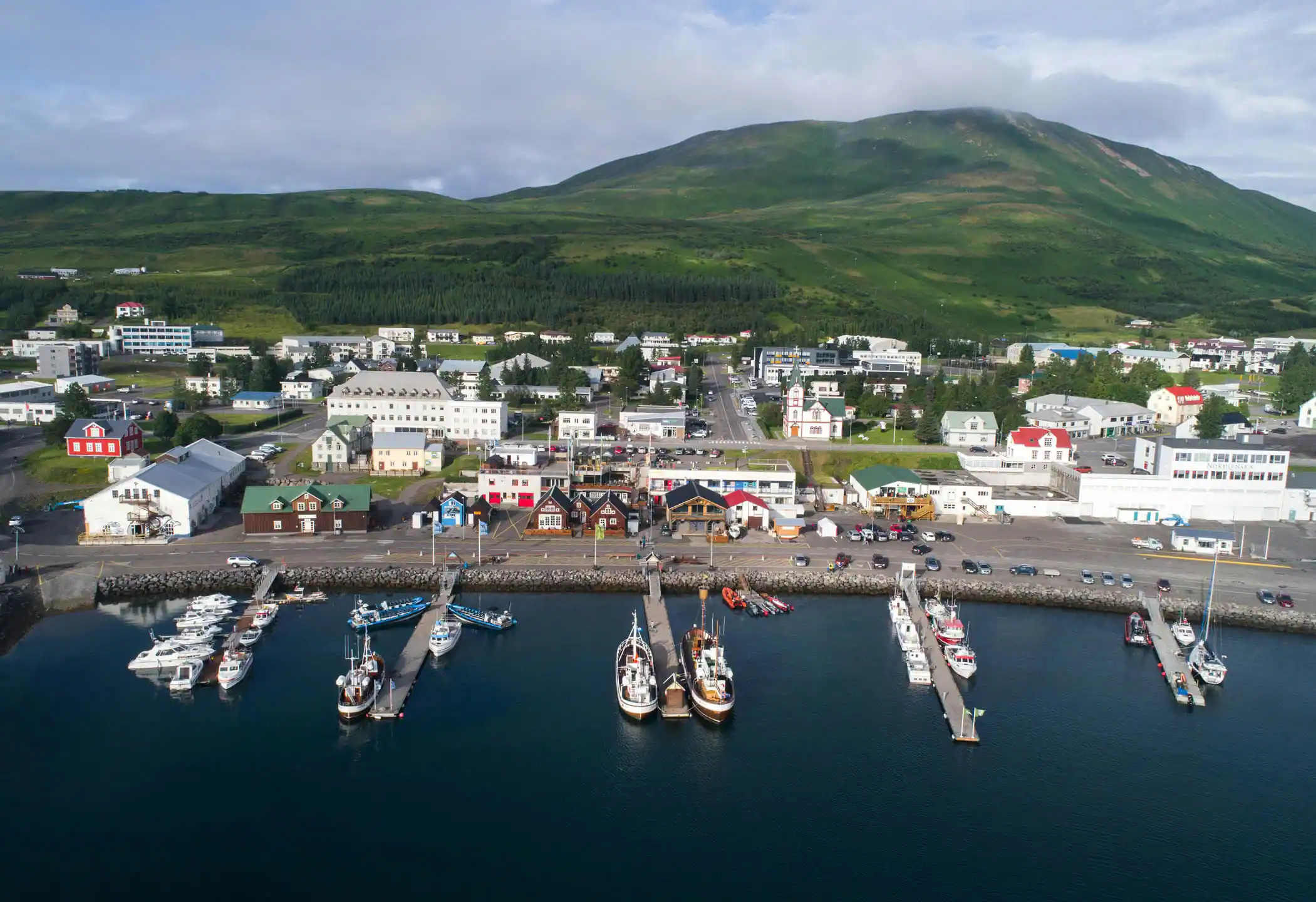
Head north until you reach the ocean and the colorful harbor of Húsavík, the Whale Watching Capital of Europe.
The Giants
- What you may see: Humpback whales, minke whales, dolphins, and sometimes the enormous blue whale feeding in the bay.
- The Tours: Choose a traditional oak boat or a RIB (rigid inflatable boat) if you want more speed and closer encounters.
GeoSea Baths
- Geothermal seawater infinity pools perched above the Arctic Ocean.
- Soak in hot water while looking straight toward the Arctic Circle.
Campervan Tip: The Húsavík campsite is within walking distance of the harbor, restaurants, and the “Ja Ja Ding Dong” bar from the Eurovision movie—perfect if you want a beer without driving.
4. Discover Ásbyrgi Canyon
The Stop: Ásbyrgi Canyon
A vast horseshoe-shaped canyon with 100-meter-high cliffs and a calm birch forest inside.
The Legend: Ásbyrgi was formed when Sleipnir, Odin’s eight-legged horse, struck the earth with one hoof, leaving behind this giant imprint.
The Reality: It is one of the most peaceful, wind-sheltered places in North Iceland. A mirror-still pond and the surrounding forest make it feel like a natural cathedral.
Campervan Tip: Drive to the last parking lot at the end of the canyon, set up a simple campervan lunch, and dine surrounded by cliffs and birdsong.

Practical Guide
Driving Conditions
- The Diamond Circle and main North Iceland road trip routes are fully paved; a 2WD campervan is enough unless you plan to explore Highlands F-roads.
- In winter, snow and ice are common. Always check SafeTravel and road.is before driving.
Best Campsites in North Iceland
- Akureyri Campsite: Open year-round with hot showers and easy access to restaurants and shops.
- Mývatn Campsite: Lakeside camping close to geothermal sights (bring a fly net in midsummer).
- Heiðarbær Campsite: A great midway stop between Mývatn and Húsavík, with a swimming pool on site.
FAQ: North Iceland Road Trip
Is North Iceland worth visiting?
Yes. While the South Coast has the most famous waterfalls, a North Iceland road trip offers the Diamond Circle, geothermal areas, canyons, whales, and fewer tourists.
How many days do I need for a North Iceland road trip?
We recommend 3–4 days to explore Goðafoss, Mývatn, Húsavík, Ásbyrgi, and surrounding areas without feeling rushed.
Can I see the Northern Lights in North Iceland?
Absolutely. Because the region is less populated, there is very little light pollution. Around Mývatn and Húsavík, your chances of seeing the Aurora Borealis are excellent from September to April, weather permitting.
Do I need a 4x4 for this North Iceland road trip?
No, not for the standard Diamond Circle and coastal roads in good conditions. A regular campervan is fine. You only need a 4x4 if you plan to add Highlands F-roads to your itinerary.
Ready to Start Your North Iceland Road Trip?
The giants, gods, and geothermal landscapes of the North are waiting.
Check our campervan availability here and start planning your North Iceland road trip today.
Last updated: November 2025