


How to Cross Rivers in Iceland Safely: Complete 4x4 Guide for F-Roads (2025–2026)
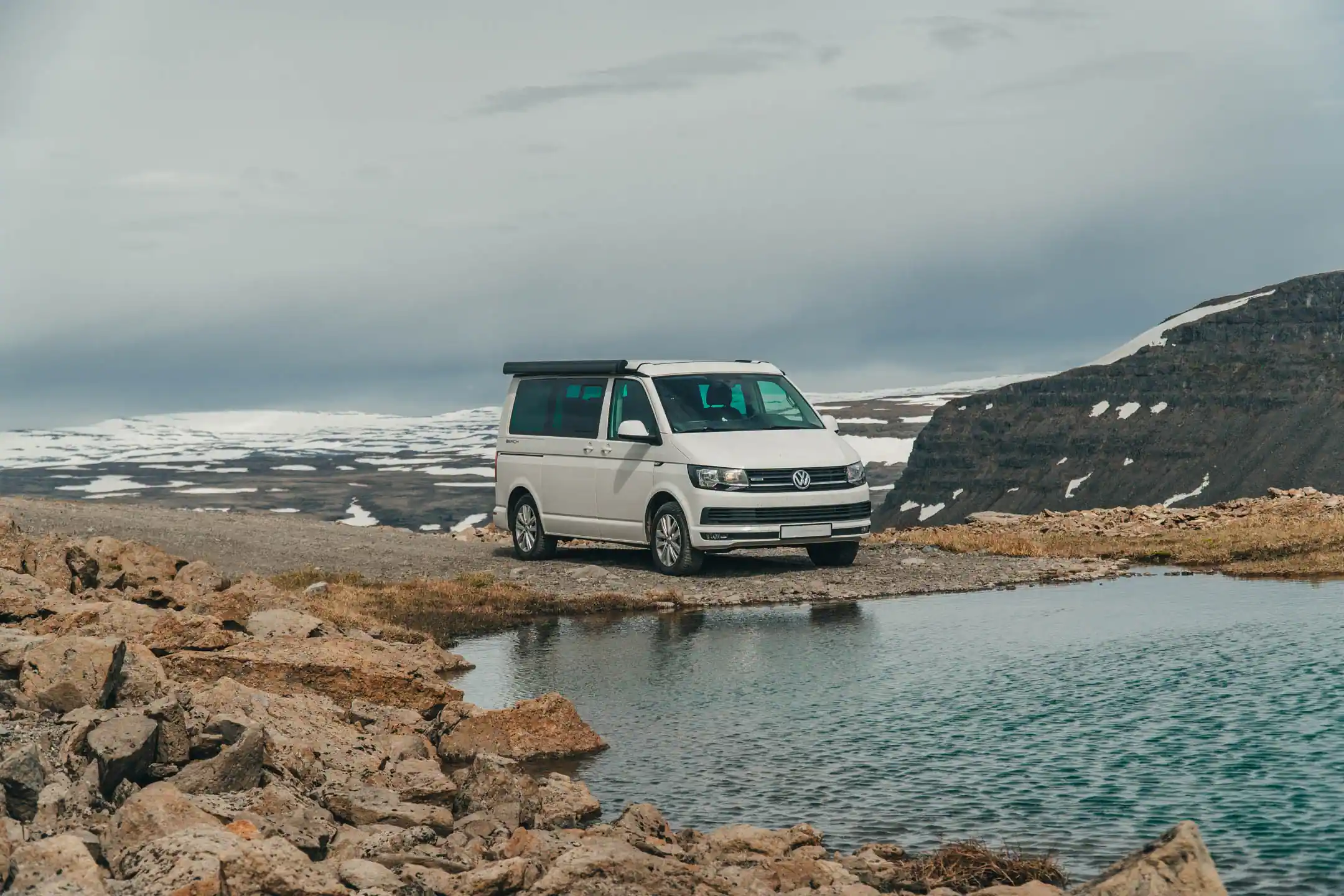
Crossing rivers in Iceland is one of the most challenging parts of driving the Highlands. Whether you’re visiting Landmannalaugar, Þórsmörk, Askja, or any F-road, safe river crossing techniques are essential. This guide explains how to cross rivers in Iceland using proven methods based on official Highland safety rules.
Before planning a Highland trip, explore our 4x4 campervan fleet. For official safety updates, always check SafeTravel Iceland.
Before You Cross: Essential River Safety Rules in Iceland
Driving through rivers in Iceland requires patience, planning, and respect for nature. The Highlands are unpredictable, and conditions change hourly. These are the steps every driver must follow.
1. Check the Water Depth
Before crossing any river in Iceland:
- Know your vehicle’s maximum wading depth.
- Never exceed that depth.
- Walk the shallowest part of the river to test depth, bottom firmness, and current strength.
- Use a long stick if the water is too cold or deep to walk safely.
2. Inspect the Riverbed
The riverbed determines whether the vehicle will remain stable.
- Choose crossings with firm gravel or rock.
- Avoid soft mud, sand, or deep holes.
- Watch for hidden boulders or logs.
3. Evaluate the Current Before You Cross Rivers
- If the current is strong enough to push you, it can push your vehicle.
- Never cross against the current.
- Cross diagonally downstream to reduce water pressure on the side of the vehicle.
- If unsure — wait. Rivers often drop later in the day.
4. Plan Your Route
- Choose safe entry and exit points with gradual, firm slopes.
- Ensure both points are visible from your position.
- Avoid deep drops or unclear channels.
- Engage 4x4 low range and use a low gear.
5. Cross With Caution
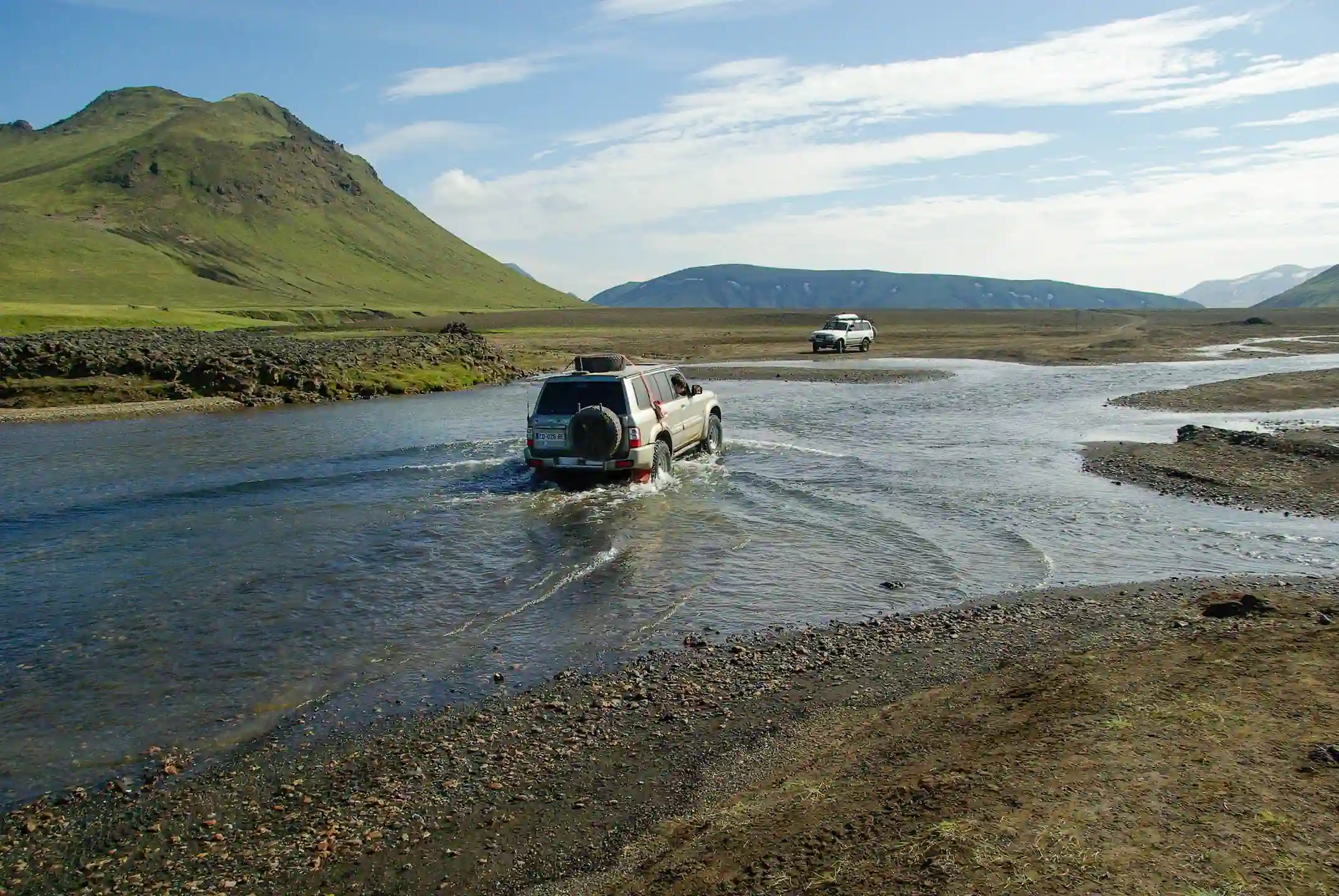
- Enter slowly — do not splash.
- Maintain a steady speed to form a bow wave.
- Do not stop mid-river — this causes sinking.
- Windows open, seatbelts off for emergency exit.
- Focus on the exit point at all times.
6. Post-Crossing Checks After River Crossings
- Stop and inspect for water intrusion.
- Pump brakes lightly to dry them.
- Confirm no warning lights appear.
- If the river was deeper than expected, check the air filter and engine bay.
When NOT to Cross Rivers in Iceland
- Water is above the vehicle’s wading limit.
- The current is fast or unstable.
- The exit point is unclear or hidden.
- Another vehicle just got stuck.
- You only have one vehicle — two are always safer.
- You feel unsure.
Essential Highland Driving Advice for Safe River Crossings
- Check conditions on road.is.
- Submit your travel plan at SafeTravel.
- Never attempt any river crossing with a 2WD vehicle.
- Only cross rivers during daylight.
- Observe local drivers — but never tailgate across.
FAQ: How to Cross Rivers in Iceland Safely
Do you need a 4x4 to cross rivers in Iceland?
Yes. River crossings are dangerous and illegal in 2WD vehicles.
Is river crossing damage covered by insurance?
No. Almost all rental insurance in Iceland excludes river-related damage.
When is the best time of day to cross rivers?
Early morning — meltwater is lowest and currents are weaker.
Can I wait for the river to drop?
Yes. River levels often fall dramatically in 1–2 hours.
Is it safer to follow another car?
Yes, watching someone cross helps — but cross alone, not bumper-to-bumper.
Ready for a Highland Adventure?
For safe Highland travel, choose a proper 4x4 camper and follow this guide carefully. Browse our Iceland 4x4 campervan fleet to begin your journey.