


Off-Grid Campervan Iceland: How Much Power Do You Really Need?
North Star Rental
| Published: April 25, 2026
If you are planning an off-grid campervan Iceland trip, one of the biggest questions is also one of the most misunderstood: how much power do you actually need?
Many travelers assume that any campervan with a leisure battery is enough. In reality, that depends entirely on how you travel. Charging a phone once a day is very different from running heating overnight, charging drone batteries, powering a laptop, using a CPAP machine, or making coffee without a campsite hookup.
In Iceland, this matters more than in many other destinations. Distances are long, weather changes fast, nights can be cold even in summer, and many travelers want the freedom to stop at scenic campsites without depending on shore power. That is why choosing the right off-grid campervan in Iceland is not just about price. It is about whether the van matches the way you actually travel.
In this guide, we break down how much power most travelers really need, what uses the most energy, what kind of setup is often too weak, and how to choose the right campervan for your trip. We also include a practical comparison using our Renault Trafic 3 and its North Star Power System as a real-world example.
Why Power Matters More on an Off-Grid Campervan Trip in Iceland
An off-grid campervan Iceland trip is very different from plugging into electricity every night at a campsite. Once you remove shore power from the equation, your onboard battery system becomes one of the most important parts of the van.
That battery may need to support:
- Heating overnight
- Fridge operation
- Phone charging
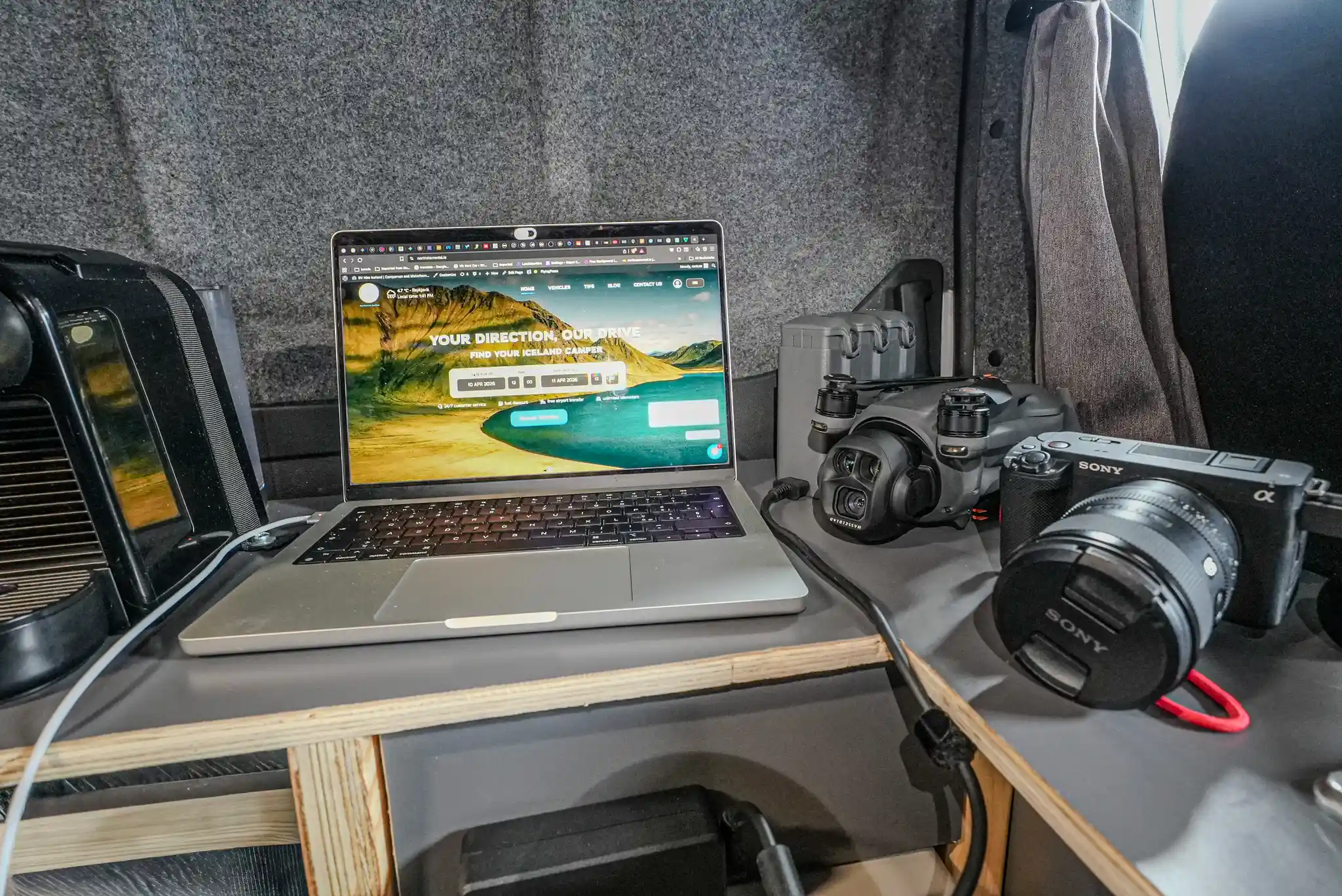
- Laptop charging
- Camera and drone batteries
- CPAP machines
- Lighting and USB devices
- Small appliances such as a coffee machine or hair dryer
If the system is too small, you end up changing your whole trip around battery anxiety. You start rationing heating, skipping coffee, limiting device charging, or booking campsites with hookups when you would rather stay somewhere quieter and more scenic.
That is the opposite of why most people choose a campervan in the first place.
How Much Power Do Most Travelers Actually Need?
The honest answer is that it depends on your travel style. Not every traveler needs the same battery capacity. Understanding your daily use is the first step to choosing the right off-grid setup.
Low Power User
You mainly need to charge phones, maybe a camera battery, and use basic interior lights. You do not use a CPAP, do not work remotely, and do not care about powered extras like coffee machines or hair dryers.
Typical need: A basic auxiliary battery may be enough, depending on the heating setup.
Medium Power User
You want heating overnight, regular phone charging, laptop charging, camera gear, and a bit more independence from campsite hookups. This is the most common traveler profile.
Typical need: A stronger battery system is recommended, especially in Iceland where heating matters.
High Power User
You want to run heating confidently, charge laptops and drone batteries, power a CPAP machine, use a coffee machine, and travel off-grid with much less compromise. This often includes photographers, remote workers, and travelers with medical equipment needs.
Typical need: A serious onboard power system, not just a budget leisure battery.
What Uses the Most Power in a Campervan?
One of the biggest mistakes travelers make is focusing only on phone charging. Phones use relatively little power compared to the systems that matter most in an Iceland campervan power setup.
The biggest power users are usually:
- Heating systems, especially during cold nights
- Fridges, because they cycle on and off for long periods
- CPAP machines and similar medical devices
- Laptops and drone charging, especially for photographers and content creators
- Coffee machines, kettles, and hair dryers, which have high short-term power draw
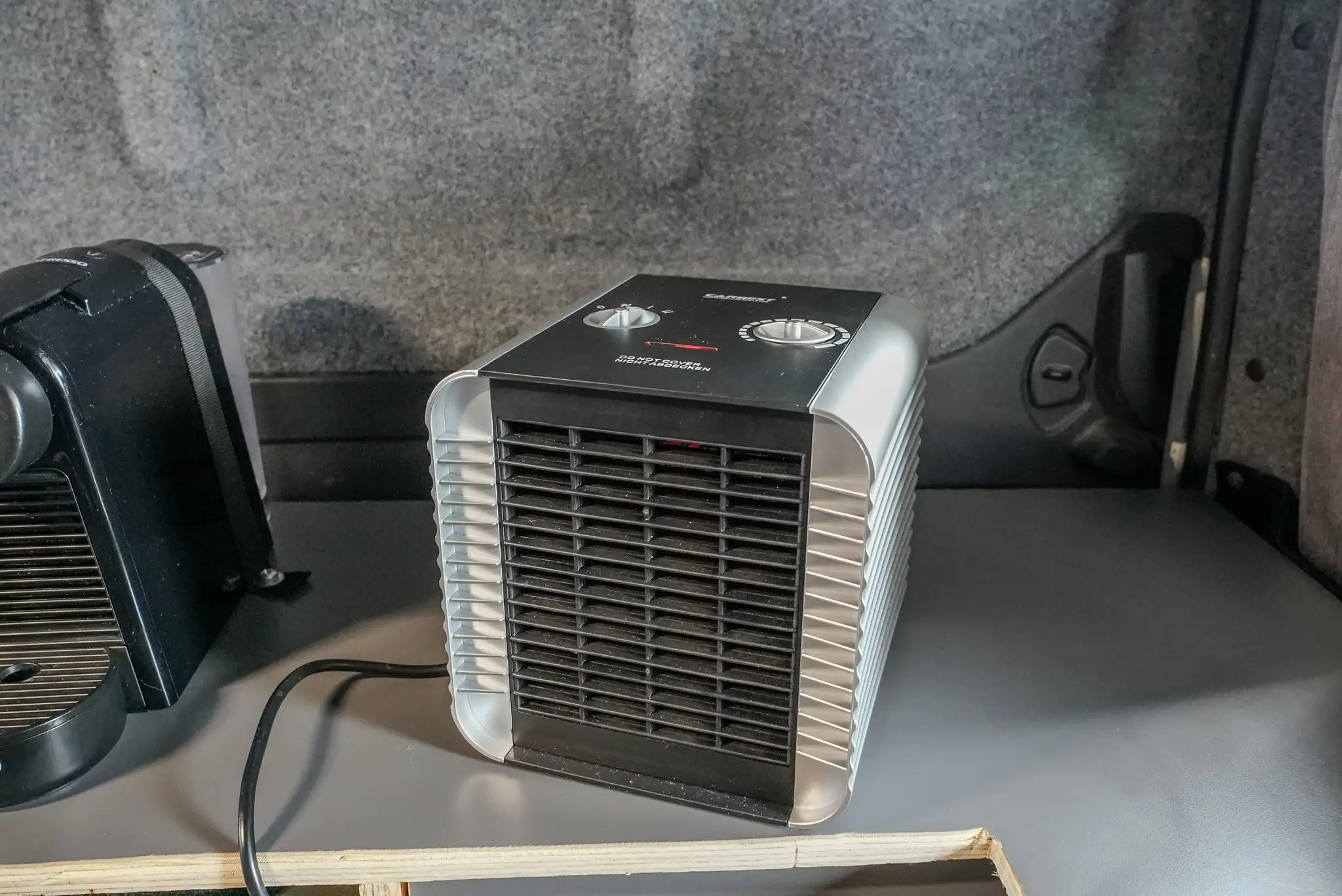
This is why a campervan that sounds fine on paper can feel weak in real life. It may handle phones easily, but struggle once you combine heating, fridge use, and modern electronics.
What Is Usually Too Weak for Off-Grid Campervan Travel in Iceland?
Many budget campervans rely on a small auxiliary battery setup. That can be enough for basic needs, but it often falls short for travelers who expect real off-grid freedom.
A weak setup usually means:
- You need campsite electricity more often
- You become careful about running heating too long
- You may not be able to support CPAP use confidently
- You need to limit device charging
- Powered extras like coffee machines are either impossible or impractical
For a short light-use trip, that may be acceptable. For a proper Iceland road trip, especially on the Ring Road, South Coast, Snæfellsnes, or Westfjords, many travelers want more independence than that.
How to Choose the Right Off-Grid Campervan in Iceland
If you are comparing vans, ask practical questions instead of looking only at price:
- Can it support overnight heating confidently?
- Can it recharge properly while driving?
- Can it handle laptops, drone batteries, and cameras?
- Can it support CPAP use?
- Can it power comfort features without external hookups?
- Will you be forced to plan your route around campsites with electricity?
- What is the real-world runtime for heating overnight?
For many travelers, the best value is not the cheapest van. It is the van that gives enough power to travel the way they actually want to travel.
Who Should Choose a Higher-Power Campervan?
A stronger power setup is especially worth it if you are:
- Traveling the Ring Road or doing longer road trip days
- Sleeping in colder conditions where heating matters more
- Using a CPAP machine or other medical equipment
- Traveling with laptops, drones, cameras, or remote work gear
- Wanting more scenic overnight stops without depending on hookups
- Looking for comfort, not just basic transport and a bed
If that sounds like your trip, power should be one of your main booking criteria.
Real Power Use Example: Our Renault Trafic 3
What matters most is not battery marketing language. It is what the system can actually do in real use.
Our Renault Trafic 3 is built around what we call the North Star Power System. This is the setup we use as a practical example when explaining off-grid power, because it reflects real travel conditions rather than theory.
In our Renault Trafic 3, the system offers roughly 1 kWh of onboard power storage and typically recharges in about 1.5 to 2 hours of driving. During normal road-trip use, daily driving usually helps recharge the system faster than normal overnight use drains it.
Based on our real-world testing in this setup:
- Heating only on medium: around 30 hours
- Heating only on full: around 22 hours
- Heating and fridge together: around 12 to 15 hours depending on fridge cycling
- Two large coffees from the Nespresso machine: about 15 to 20% battery use
- Hair dryer for 5 minutes: around 5 to 10% battery use
How Much Power Do You Need for a CPAP in a Campervan?
This is one of the most important use cases for a stronger off-grid setup. Travelers using CPAP machines often need more certainty than a basic campervan battery can provide.
In practical terms, a stronger system makes a huge difference because it gives you more confidence for overnight use without depending entirely on campsite hookups. For many travelers, that is one of the main reasons to choose a premium power setup in Iceland.
If CPAP use is part of your trip, battery quality is not a luxury. It is essential.

How Much Power Do You Need for Laptops, Drones, and Cameras?
For content creators, photographers, remote workers, and travelers carrying multiple devices, stronger onboard power becomes a major advantage.
A normal day on the road might include:
- Charging 2 to 3 phones
- Charging a laptop
- Charging drone batteries
- Charging camera batteries and power banks
A weaker campervan battery can start to feel limiting very quickly once you add all of that on top of overnight heating. That is one reason higher-capacity campervan power systems appeal strongly to photographers and remote workers traveling in Iceland.
Do You Really Need a Coffee Machine in an Off-Grid Campervan?
Strictly speaking, no. But this question helps explain the real difference between a basic and stronger off-grid setup.
If your battery system can support an onboard coffee machine without campsite electricity, that tells you something important. It means the system is not just barely coping with essentials. It has genuine usable power for comfort as well.
That is exactly what many travelers want from an off-grid campervan Iceland trip. Not survival. Comfort, flexibility, and fewer compromises.
Basic Campervan Setup vs Stronger Off-Grid Setup
Here is a simple comparison of what different power systems can realistically support:
| Feature | Basic Campervan Setup | Stronger Off-Grid Setup |
|---|---|---|
| Phone charging | Usually fine | Easy, multiple devices |
| Laptop charging | Limited | Practical for regular use |
| Drone and camera gear | Can be restrictive | Much better suited |
| Heating confidence overnight | More limited | Much stronger runtime |
| CPAP suitability | Often uncertain | Far more practical |
| Off-grid coffee machine use | Usually not realistic | Possible |
| Overall flexibility | More dependent on campsites | Far more independent |
Extra Resources for Planning an Off-Grid Campervan Trip in Iceland
These resources are useful before and during your trip:
- Road.is for real-time road conditions and closures
- Vedur.is for weather forecasts and warnings
- SafeTravel Iceland for travel safety information
- Best campsites in Iceland for planning overnight stops
- Campervan Rental Iceland for broader planning advice
Frequently Asked Questions About Off-Grid Campervan Travel in Iceland
How much power do I need for an off-grid campervan in Iceland?
It depends on your trip style. Some travelers mainly need phone charging and lights, while others need enough power for heating, laptops, drones, CPAP machines, and small appliances. For many proper Iceland road trips, a stronger system is a much more comfortable choice than a basic battery setup.
Is a basic leisure battery enough for Iceland?
For light use, sometimes yes. For real off-grid travel with heating and modern electronics, many travelers prefer a stronger setup. Iceland's cold nights and longer driving routes make a more capable system much more practical.
Can a campervan in Iceland run a CPAP machine overnight?
Some can, but not all setups are equally suitable. A stronger onboard power system gives much better confidence for overnight CPAP use. If CPAP support matters for your trip, ask specifically about the power setup before booking.
How important is charging while driving in Iceland?
Very important. Daily driving is one of the best ways to keep an onboard system topped up, especially on longer Iceland road trips. A strong charging setup can make off-grid travel much easier and more relaxed.
How long can campervan heating last overnight?
That depends on the system. In our Renault Trafic 3 testing, heating ran for around 30 hours on medium and around 22 hours on full. Actual runtime varies by temperature, heater setting, and what else is using power at the same time.
Can I use a coffee machine in an off-grid campervan?
In some stronger setups, yes. A campervan that can run a coffee machine without campsite electricity usually has a much more capable power system than a basic setup.
What makes a campervan better for photographers and remote workers?
Photographers and remote workers often need enough power for laptops, drone batteries, camera batteries, phones, and power banks. A stronger onboard system makes that much easier without forcing the trip to revolve around campsite hookups.
Final Thoughts: How Much Power Do You Really Need?
The answer is simple: you need enough power to travel without constantly thinking about power.
For a true off-grid campervan Iceland trip, that usually means more than a small basic leisure battery. If your trip includes heating, modern electronics, CPAP use, or comfort features, a stronger onboard system makes a very real difference.
Our Renault Trafic 3 is designed for exactly that kind of traveler. With the North Star Power System, it offers much more usable power than a basic setup, making it a strong fit for travelers who want more freedom and fewer compromises on the road.
If you want a campervan that goes beyond the basics, you can browse our North Star Rental fleet or learn more about our Renault Trafic 3 campervan.